

Interiors Column - April/May 26
The Perfect Match
Why homes look better when things don’t quite go with each other.
A quirk of interior design or just something that keeps our creativity sparking - there is something quietly reassuring about a home where not everything matches.
While showroom-perfect interiors can look striking, they often feel stiff, fragile and oddly impersonal once lived in.
By contrast, homes that mix styles, tones and textures tend to feel warmer and more relaxed, even if the individual pieces are less expensive or less “designed”.
Psychology
Part of this comes down to how the brain processes visual information. Essentially, when everything is coordinated too precisely, the eye stops moving. There is nothing to explore, which can make a space feel flat.
Small differences in colour, material and scale give a room rhythm, creating a sense of depth and ease. This is why older homes often feel more inviting than newly finished ones. Essentially, they evolved over time rather than being assembled all at once.
The look
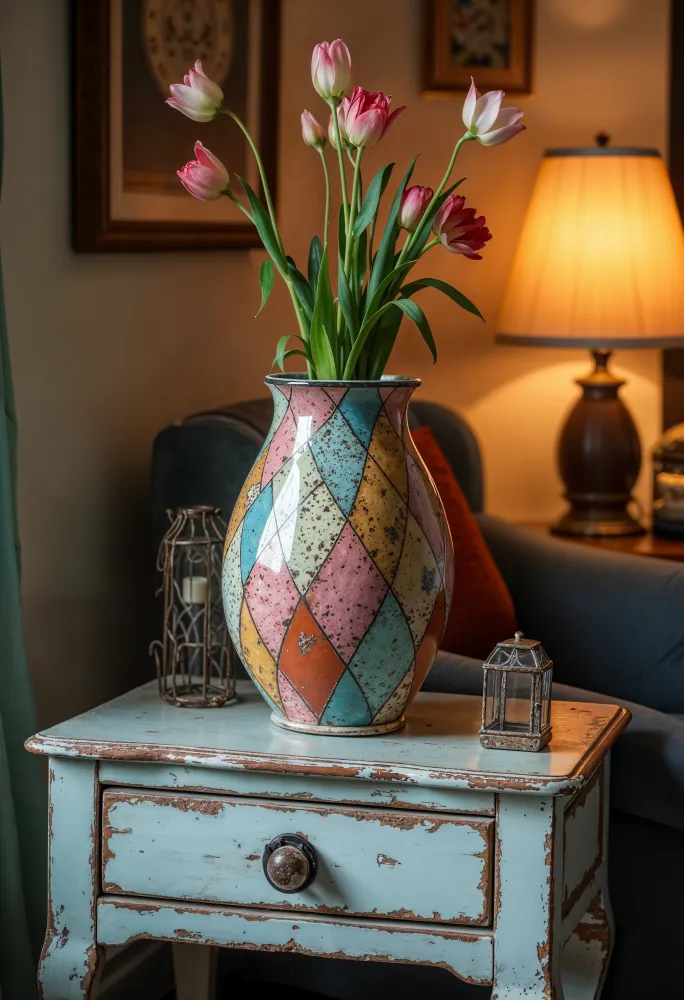
To achieve this look deliberately, it helps to start – in immediate, apparent contradiction to what you’re setting out to achieve! – with one unifying idea (but bear with it!). You’re looking for a general colour family, a dominant material or a consistent level of formality, then allow variation around it.
Wood finishes do not need to match exactly, and in fact mixing light and dark woods often adds richness. Meanwhile, upholstery works best when fabrics are related but not identical… for example combining linen, cotton and wool in similar tones.
Furniture does not need to come from the same range, as long as proportions feel balanced, while artwork provides another opportunity to avoid over-coordination, with mismatched frames, different scales and varied subjects tending to feel more personal than a single themed set.
Lighting follows the same rule. A mix of floor lamps, table lamps and ceiling fittings creates atmosphere far more effectively than repeating one style throughout. Importantly, unmatching does not mean chaos.
Despite all this freedom you feel coming your way, there still needs to be restraint. Too many competing colours or statement pieces can feel unsettled.
The aim is quiet variety, not visual noise. Often the most successful rooms have one or two anchoring elements, such as a sofa or dining table, with everything else playing a supporting role.
At the end of the day, homes that feel calm are rarely the ones that followed a catalogue exactly. They are the ones that allowed for imperfection, flexibility and gradual change, much like ourselves, as people!


