

Gardening: Plant Hunters Article - June/July 26
Fabulous Phlox by Martin Blow
Border Phlox are old fashioned plants with great scent, hardy disposition and minimal care requirements. They can give years and years of service in the herbaceous border or cottage garden and provide a wonderful, scented summer display.
Phlox are very long-lived plants and although they are easy to move, they will always leave behind roots that can send up new plants – so plan where you want them to grow first. The ideal site is sunny, with rich, well-dug soil with perhaps a little late afternoon shade to protect them from the extremes of summer heat. In practice they get full sun or light shade in my garden and do pretty well in either.
Border Phlox are incredibly hardy and start to show new growth in February. The new leaves are often attractively coloured but only a few varieties maintain these coloured leaves into summer, the others gradually turn green. Variegated Phlox have lovely white and green or cream, red and green leaves throughout the summer to complement the flowers.

Enriching the soil with compost dug into the top layer of the soil will do wonders for the plants as phlox have shallow feeding roots. I no longer feed my phlox other than a dressing of compost, as this can lead to lush lanky growth. Give the plants some space, if possible, to improve air circulation; plant border phlox about 2ft / 60cm apart. Water the ground around the plants in dry weather, although once established phlox can withstand some drought.
At the end of the season cut down the stems to ground level and put them in the council waste bin rather than the compost heap to avoid carrying any pests or diseases from season to season.
There are hundreds of varieties to choose from and you are likely to find both old, tried and tested varieties as well as new innovations at a plant hunters fair and there is a range of heights from 2ft / 60cm to 5ft / 150cm. If you have the space, you can select varieties with different flowering times to extend the season; early varieties can begin to flower in June, the latest ones start in late August.
The most common problem is powdery mildew – white dust on the leaves that can disfigure the plants. This is often blamed on dry soil, but overwatering is more likely to cause problems. Over feeding and lack of air circulation can also make things worse. I do also find that mildew tends to go away the year after planting.
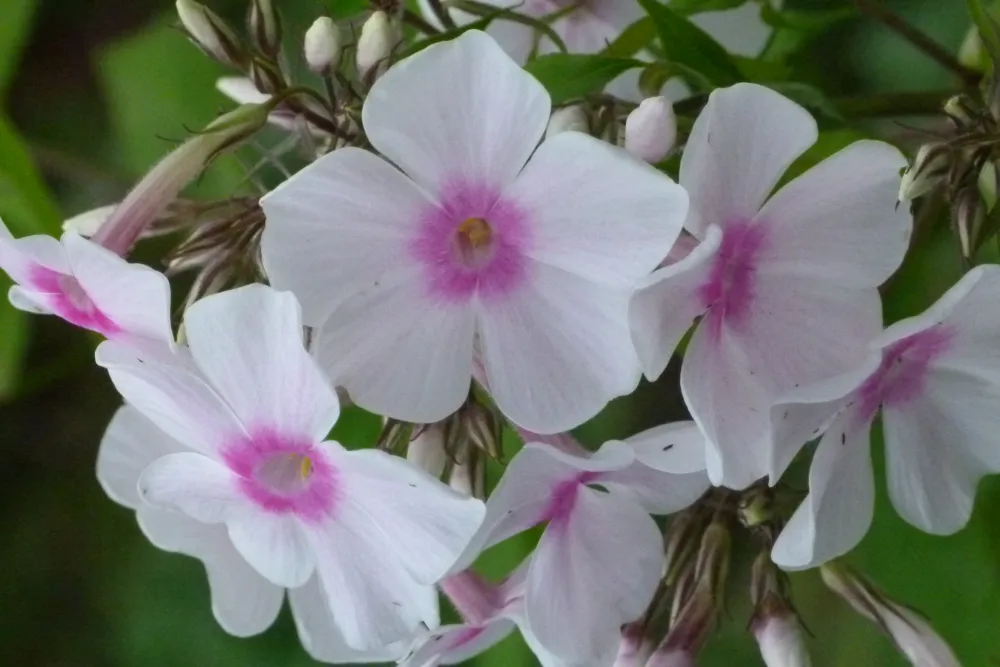
Varieties that do well for me include David (early, white), Lavender Cloud (latish, lavender and white), Othello (purple, late), Graf Zeppelin (pink-eyed white, late), Blue Paradise (mauve shading to blue, mid-season), Discovery (pink, early), Miss Pepper (pink, deeper eye, late), Brigadier (deep rose, early) and Peppermint Twist (pink and white, late) but there are lots more to discover.
Janet & I organise Plant Hunters’ Fairs, specialist plant fairs at wonderful locations. Please see www.planthuntersfairs.co.uk for a full list of our 2026 plant fairs. Please check website for all the latest updates before travelling.
Plant Fair Dates for your 2026 diary: Sunday 21st June, Middleton Hall, Nr Tamworth, B78 2AE, entry to Gardens & Plant Fair only £4. Sunday 19th July, Chasewater Country Park, WS8 7NL, free entry to Plant Fair & Country Park (P&D parking). Sunday 26th July, 1620s House and Garden, Nr Coalville, LE67 2FW, entry to Garden & Plant Fair £2.


